
This post may contain affiliate links. Please read our disclosure policy.
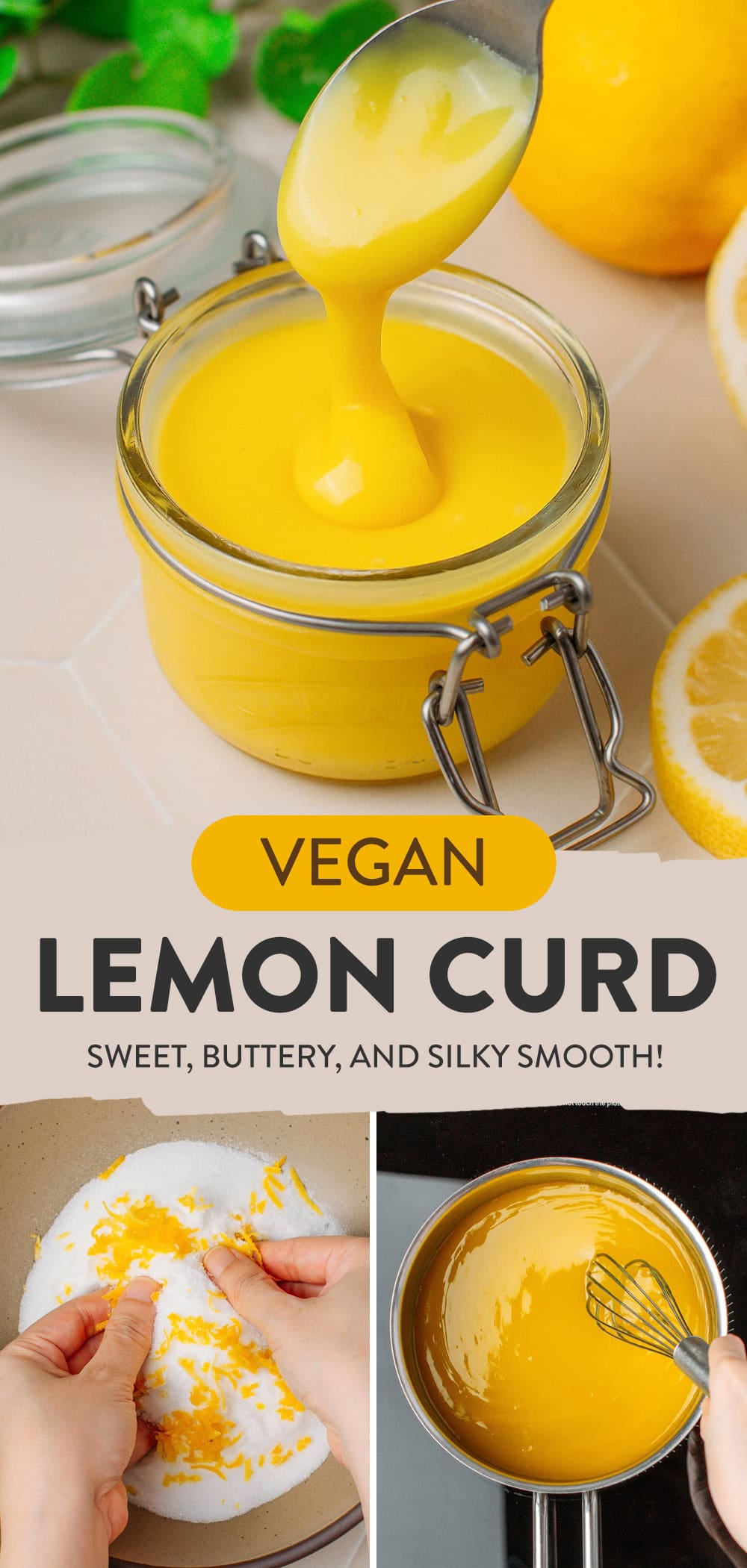
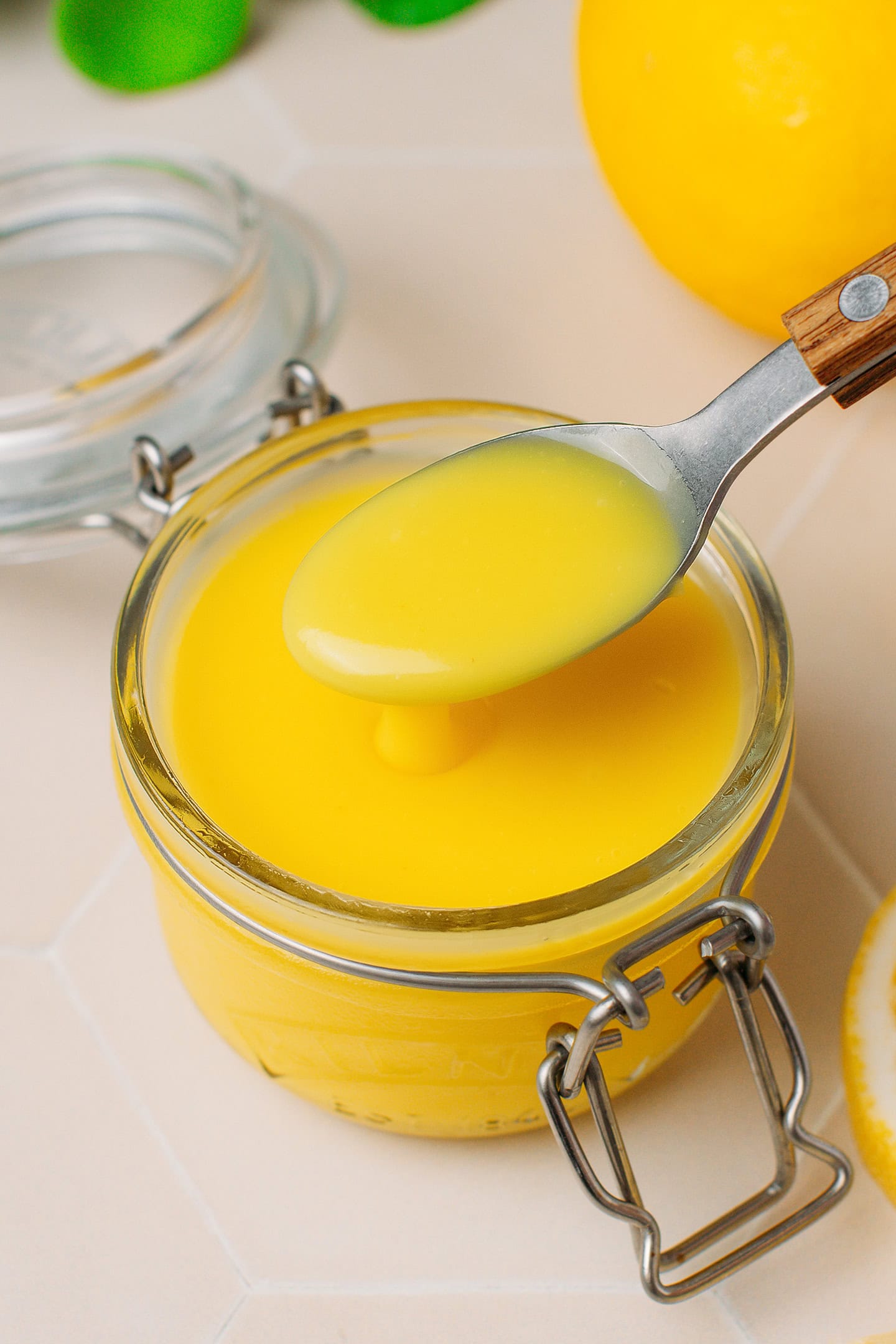
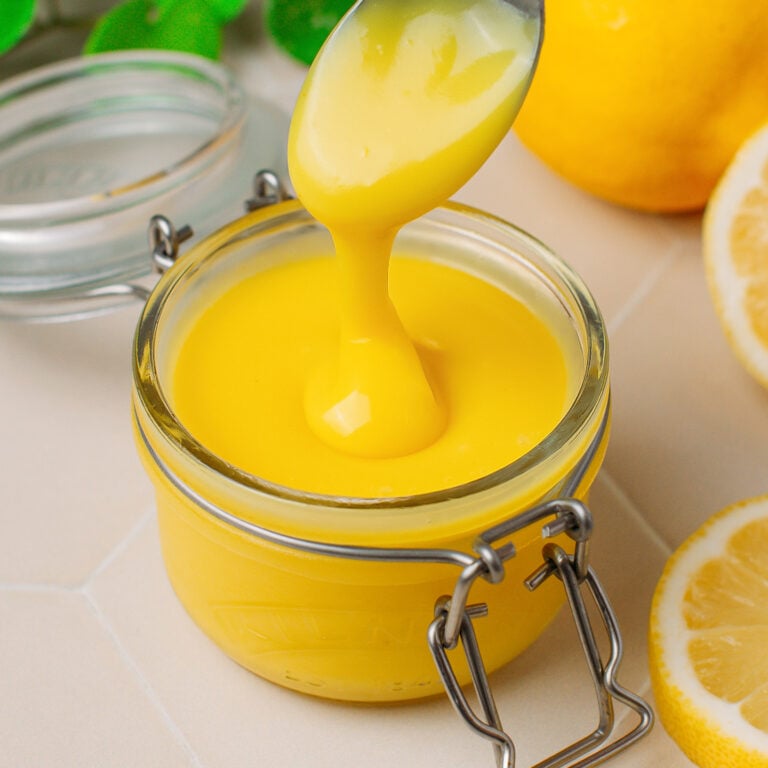
You won’t find any eggs or dairy butter in this vegan lemon curd! It’s just as silky and buttery as the traditional version, with a deep, zesty flavor and just the right amount of sourness. Enjoy it over scones, pancakes, crêpes, or drizzled over oatmeal!
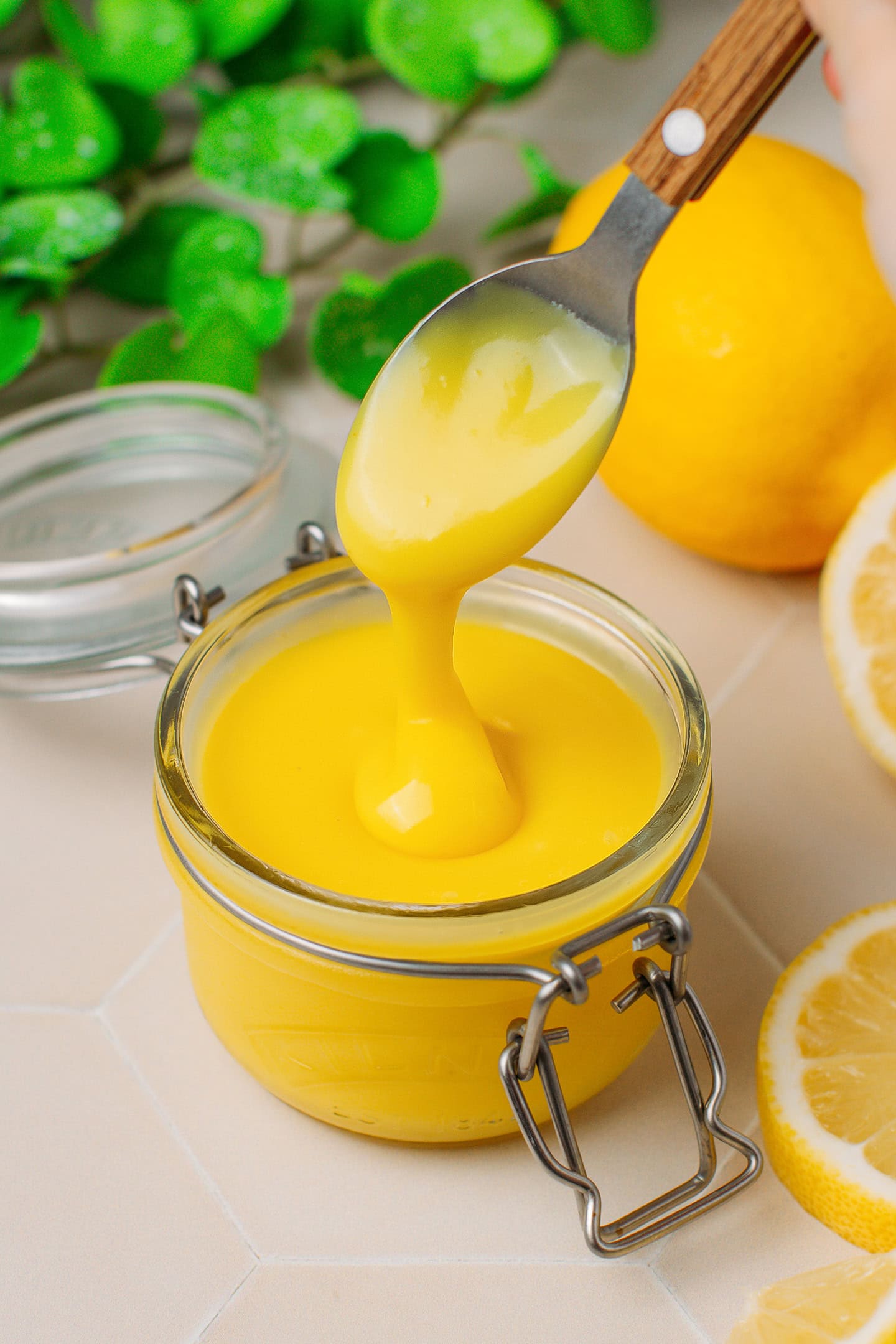
Bright, tangy, and wonderfully creamy, this vegan lemon curd will instantly brighten a slice of cake, a tart, or even a stack of pancakes.
I’ve always loved lemon curd, even though I’m not usually the biggest fan of lemon desserts to begin with. I first discovered it when I bought a jar from Wilkin & Sons, and I was instantly hooked. There’s just something about the combination of sweet, tangy lemon and that buttery, silky consistency that I can’t resist.
Making a vegan version is actually pretty straightforward, but getting the flavor right took a bit more testing. I first tried using coconut cream, which works well for creating a rich, creamy texture, but there’s one problem: it tastes like coconut. So, coconut cream is out, and plant-based cream is in. Which cream? Any heavy cream with a mild flavor will work. Combined with fresh lemon juice and zest, vegan butter, and a pinch of kala namak for a subtle eggy note, and you’ve got a spread that’s ten times better than store-bought!
⭐️ What Makes It So Good
- Bright, tangy, and lemony. Fresh lemon juice brings the tang, while finely chopped lemon zest adds a concentrated citrus aroma. Unlike some lemon curds, this one isn’t overly sour. I’ve carefully balanced the sweetness, acidity, and richness to give you a bright lemon flavor without making you pucker.
- Silky smooth and buttery. Adding the butter toward the end and straining the mixture through a fine-mesh sieve gives the curd a glossy, ridiculously smooth texture.
- Easy to make. Since this recipe doesn’t rely on eggs, there’s no need for a double boiler. Simply cook everything in a pan until thickened, strain it, and you’re done.
🍋 Ingredient Notes
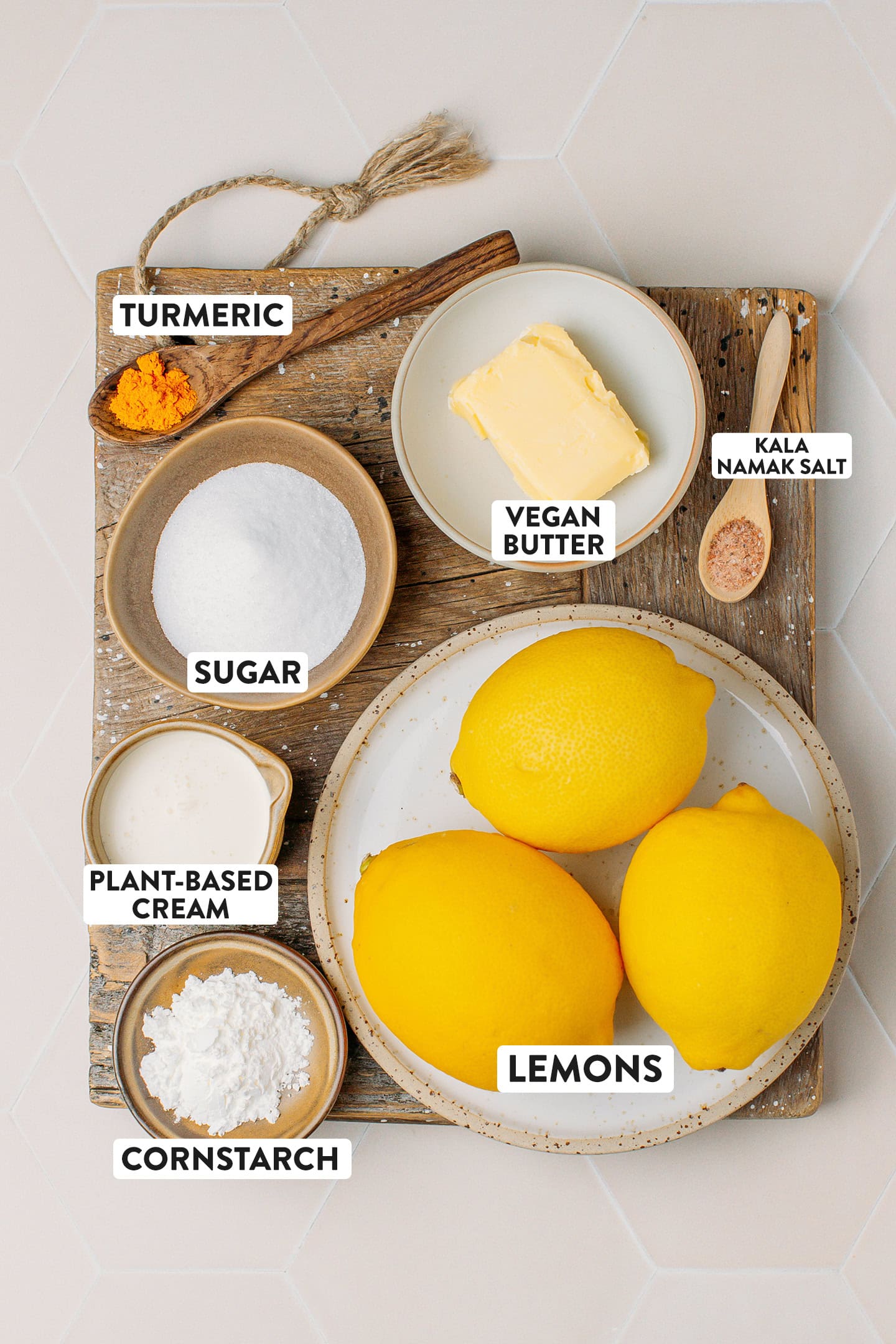
- Lemons – Since you’ll be using the zest, I recommend choosing organic, unwaxed lemons. You’ll need about two large lemons for one batch of this recipe.
- Vegan butter – Butter is added at the end of cooking to add richness, a buttery flavor, and to help the curd thicken once chilled. Use vegan butter sticks, not a butter spread.
- Plant-based cream – Use plain, unsweetened vegan cream. I used Flora’s 31% fat cream, but feel free to use your favorite plant-based heavy cream brand.
- Sugar – Granulated white sugar works best here, as it doesn’t overpower the lemon.
- Cornstarch – This is what thickens the mixture.
- Turmeric – Since there are no egg yolks in this recipe, I rely on turmeric to give the lemon curd its vibrant yellow color.
- Kala namak – Also known as black salt. I add a pinch to give the curd a subtle eggy note that helps mimic the flavor of traditional lemon curd. It’s totally optional, though, so feel free to omit it if you don’t have it.
🥣 How to Make Lemon Curd
Zesting & Juicing the Lemons
First, zest the lemons BEFORE juicing them. It gives you a better grip when zesting and makes it easier to get all of the zest off. I like to use this citrus zester, but a fine grater will work too.
Then, juice the lemons using either an electric citrus juicer or your hands. If squeezing them by hand, squeeze the lemon halves over a small bowl, then strain the pulp to remove any pulp and seeds.
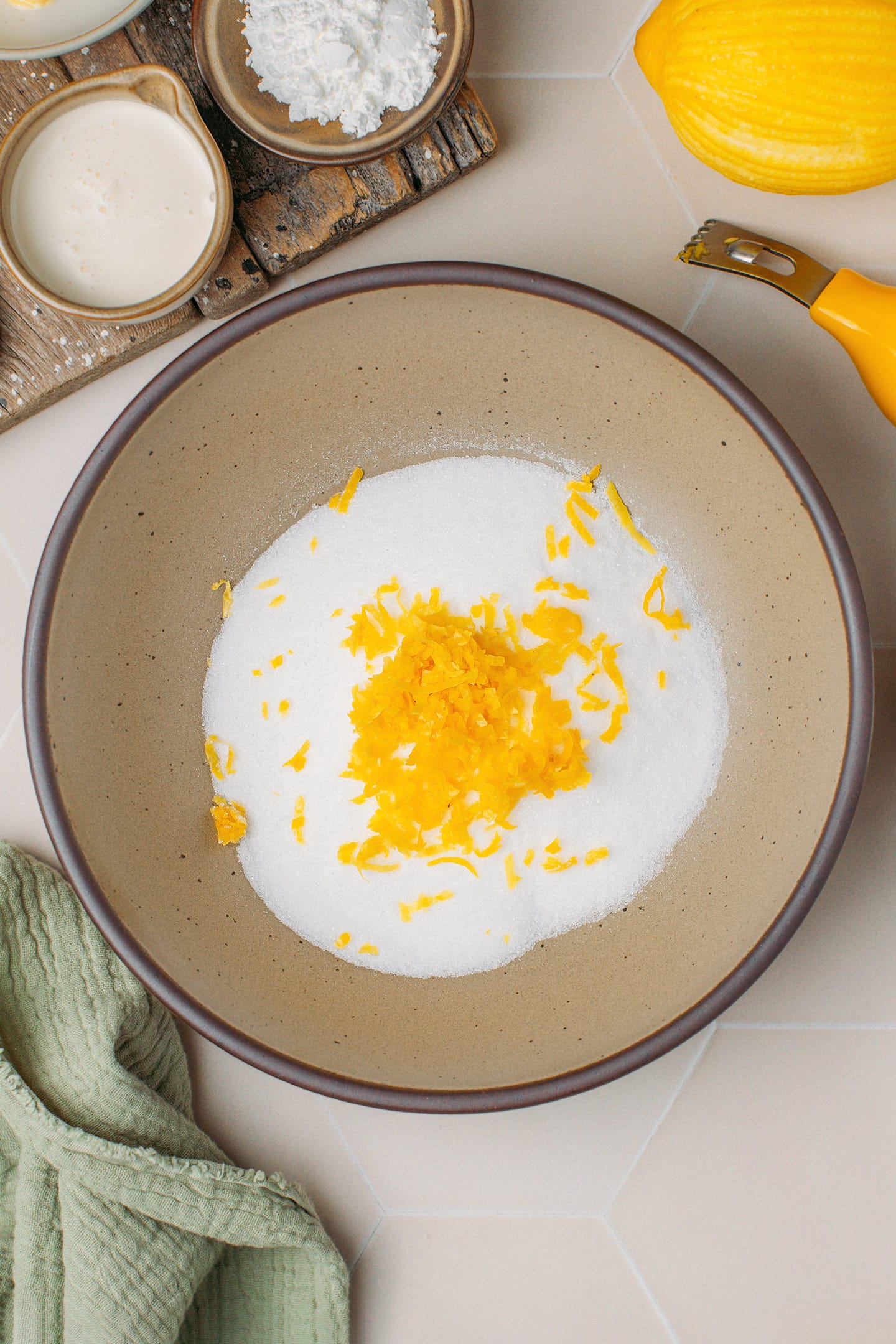
- Combine the sugar and lemon zest. Add the sugar and finely chopped lemon zest to a bowl.
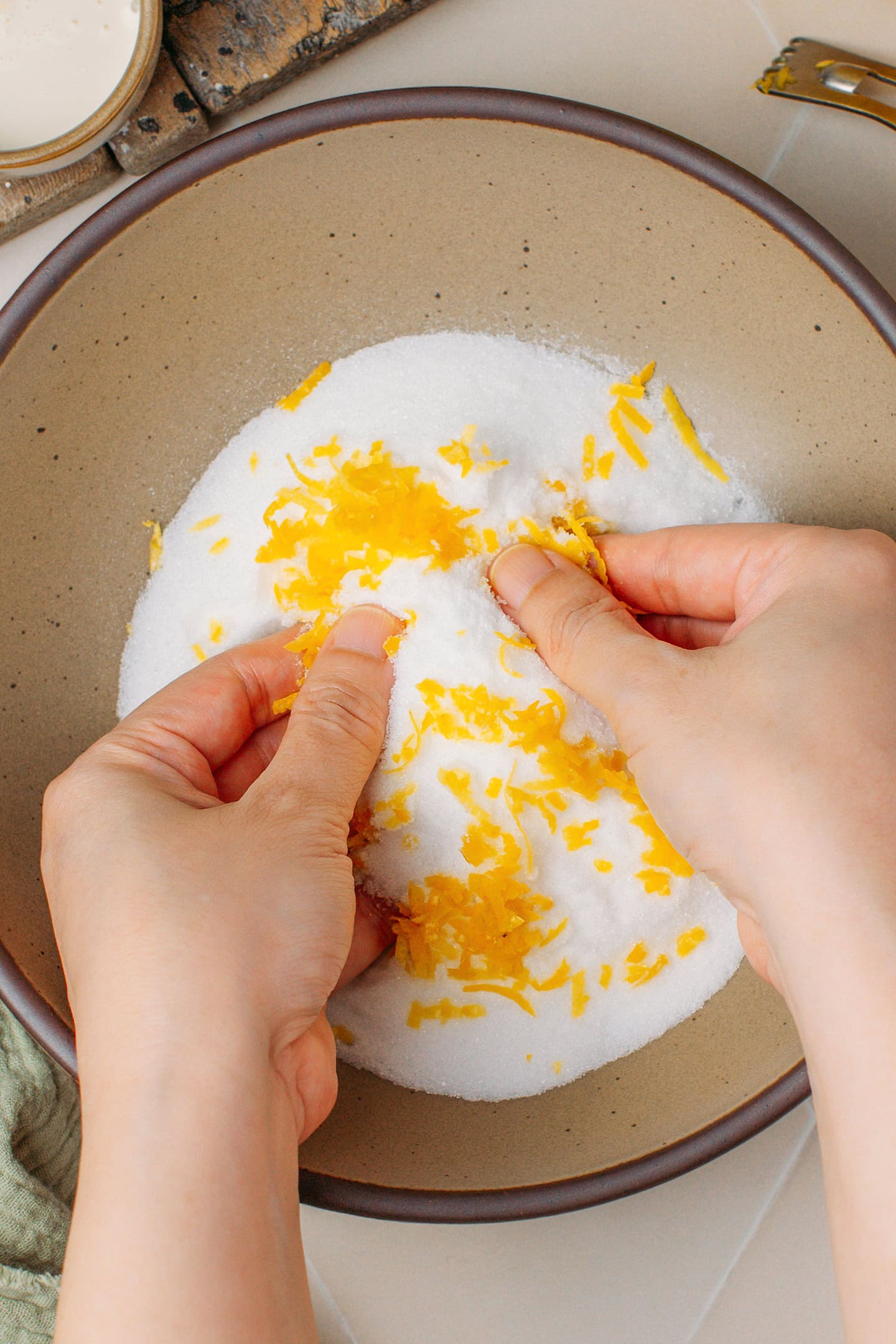
- Rub. Using your hands, rub the lemon zest with the sugar. This step releases the essential oils from the zest, resulting in a more intense lemon flavor.
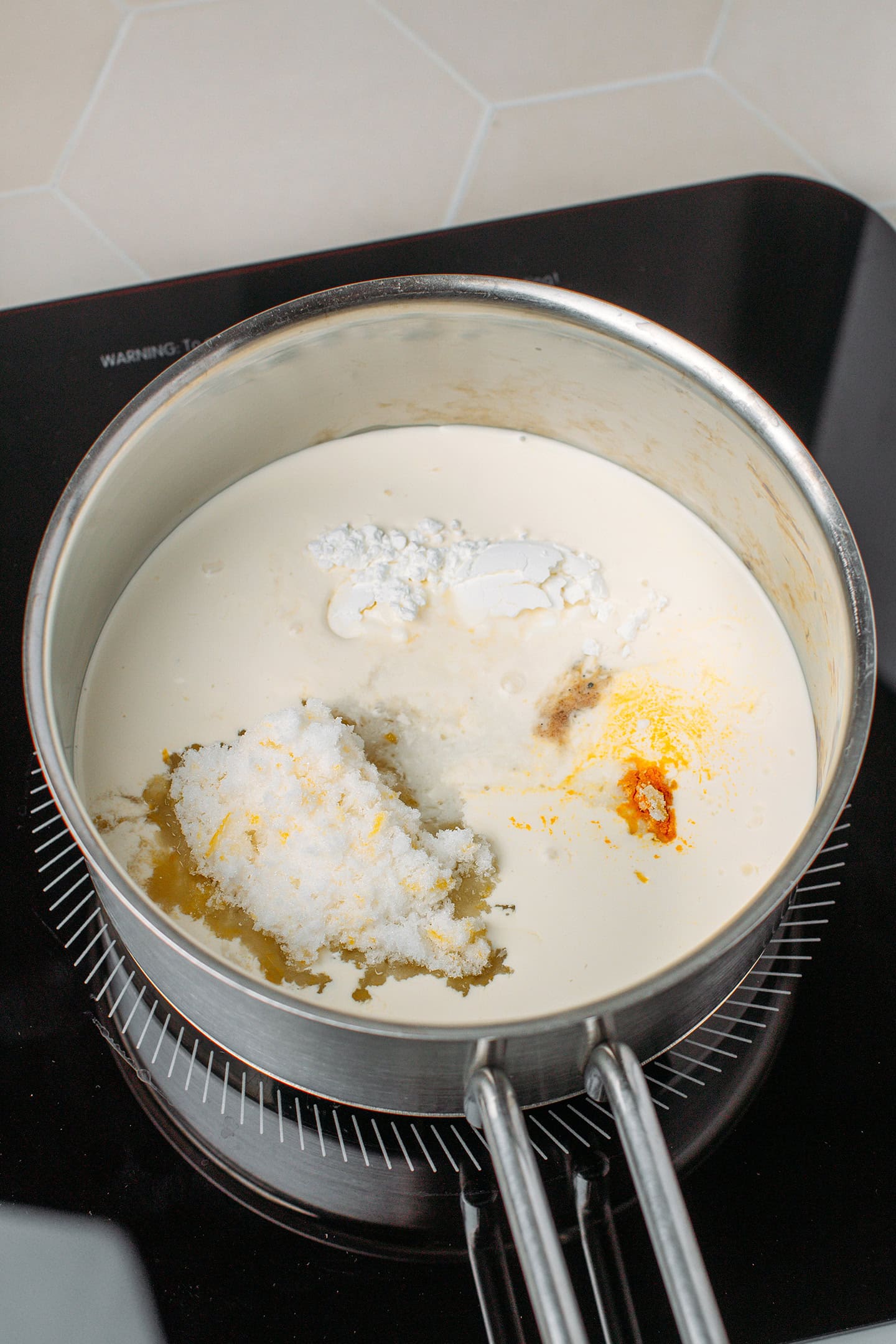
- Dissolve the cornstarch. Transfer the sugar, lemon zest, lemon juice, turmeric, kala namak, cornstarch, and vegan cream to a saucepan. Whisk until well combined.
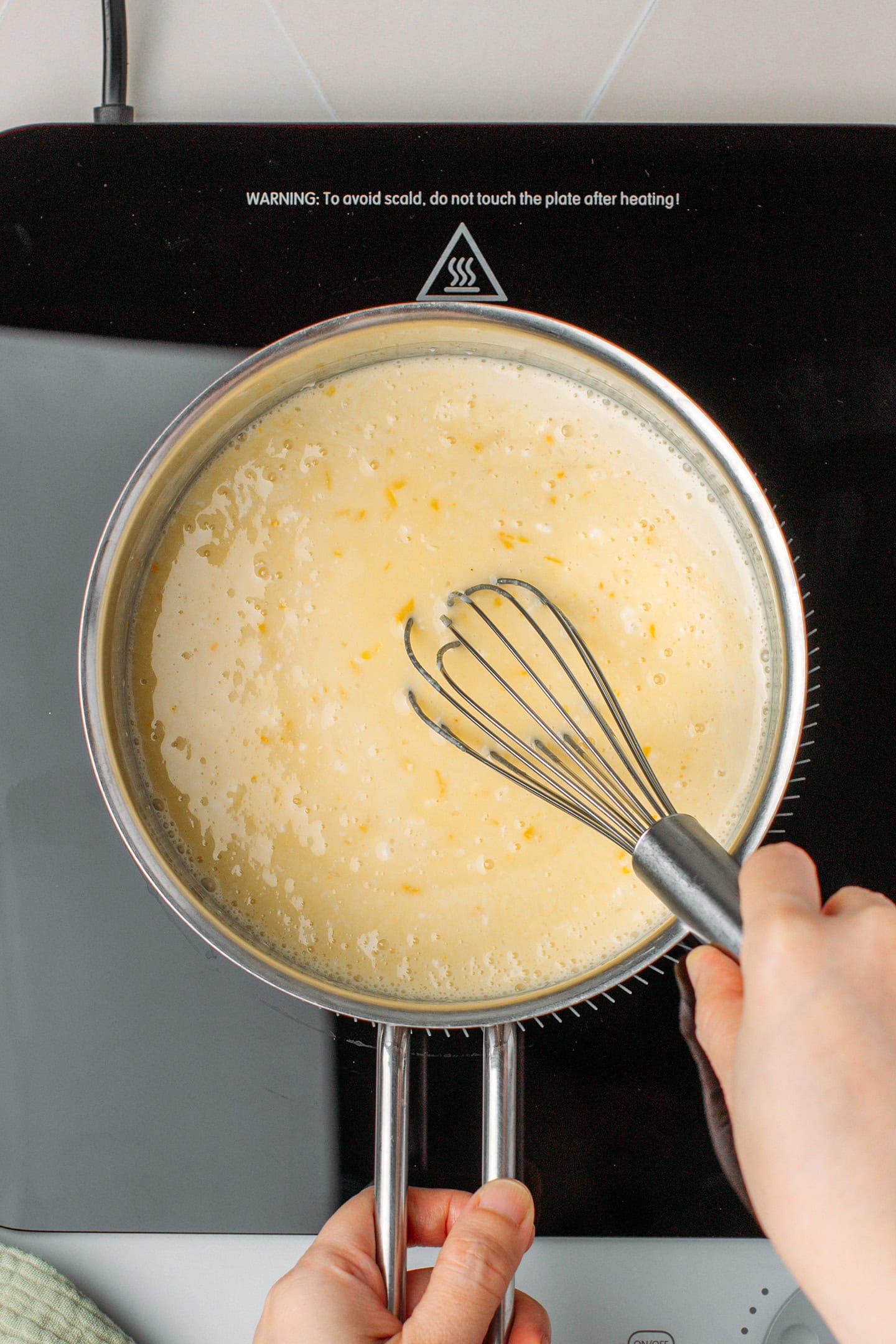
- Heat until thickened. Heat the mixture over medium heat, whisking constantly.
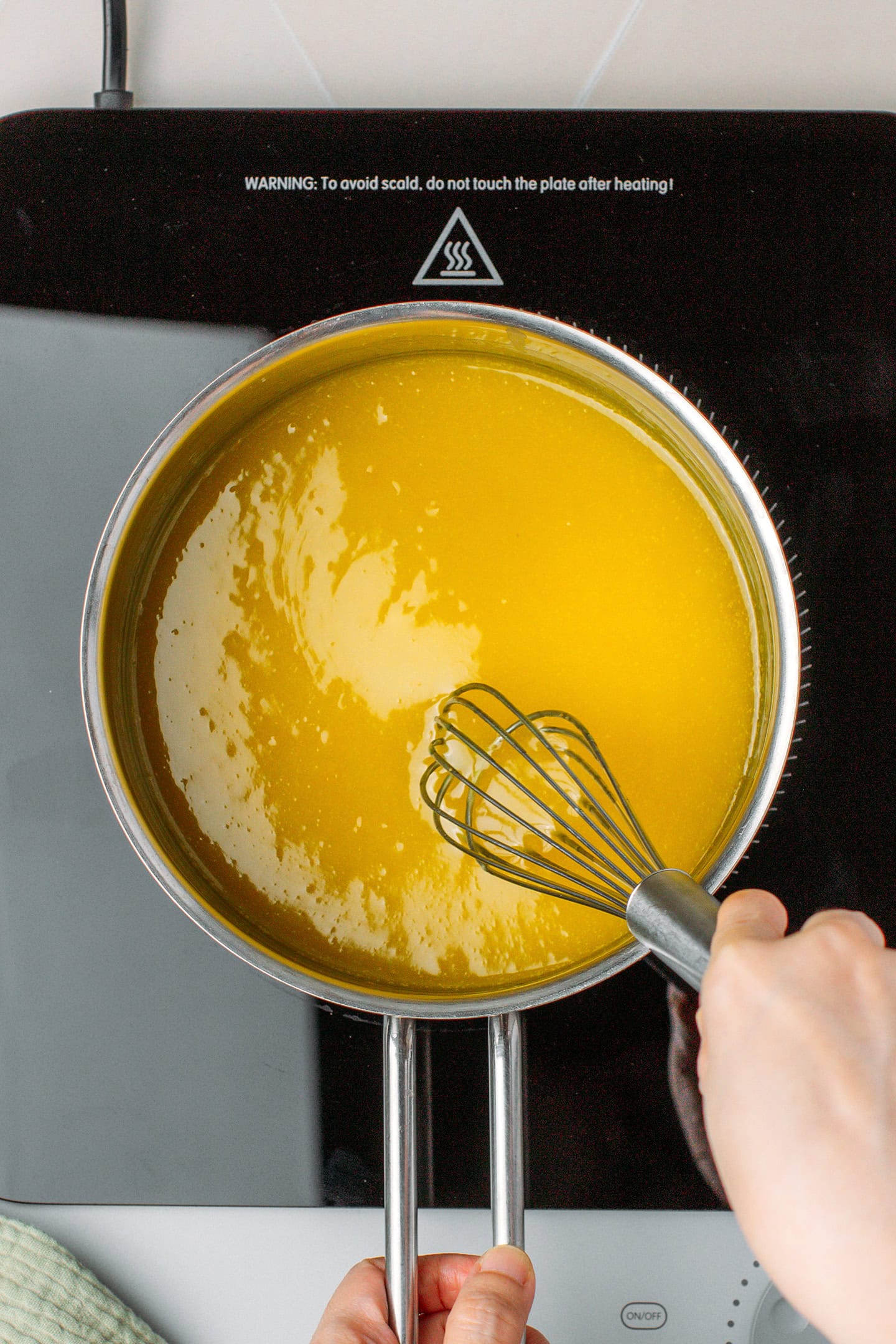
- The mixture will thicken once it reaches a boil.
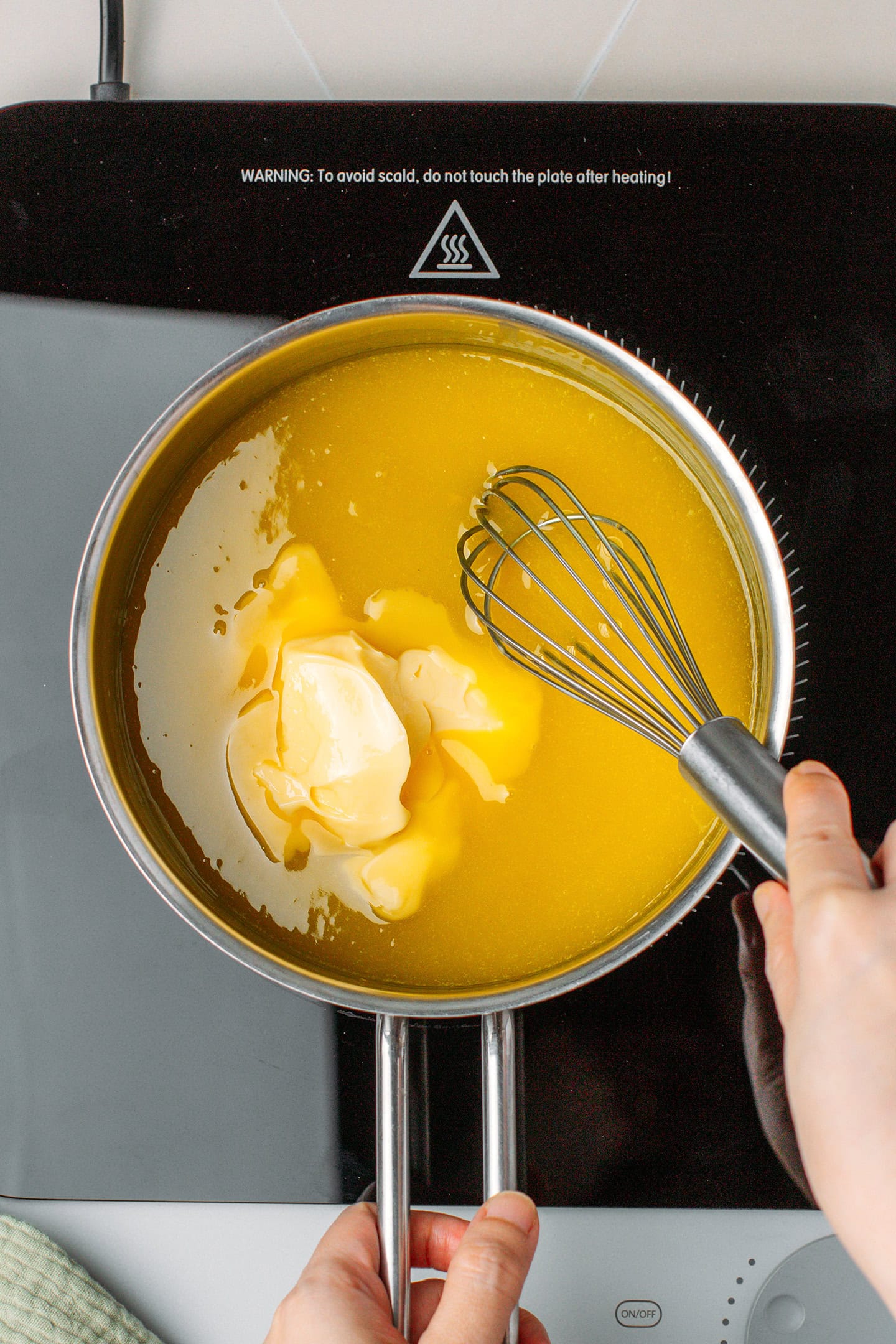
- Stir in the butter. Remove from the heat and add the vegan butter.
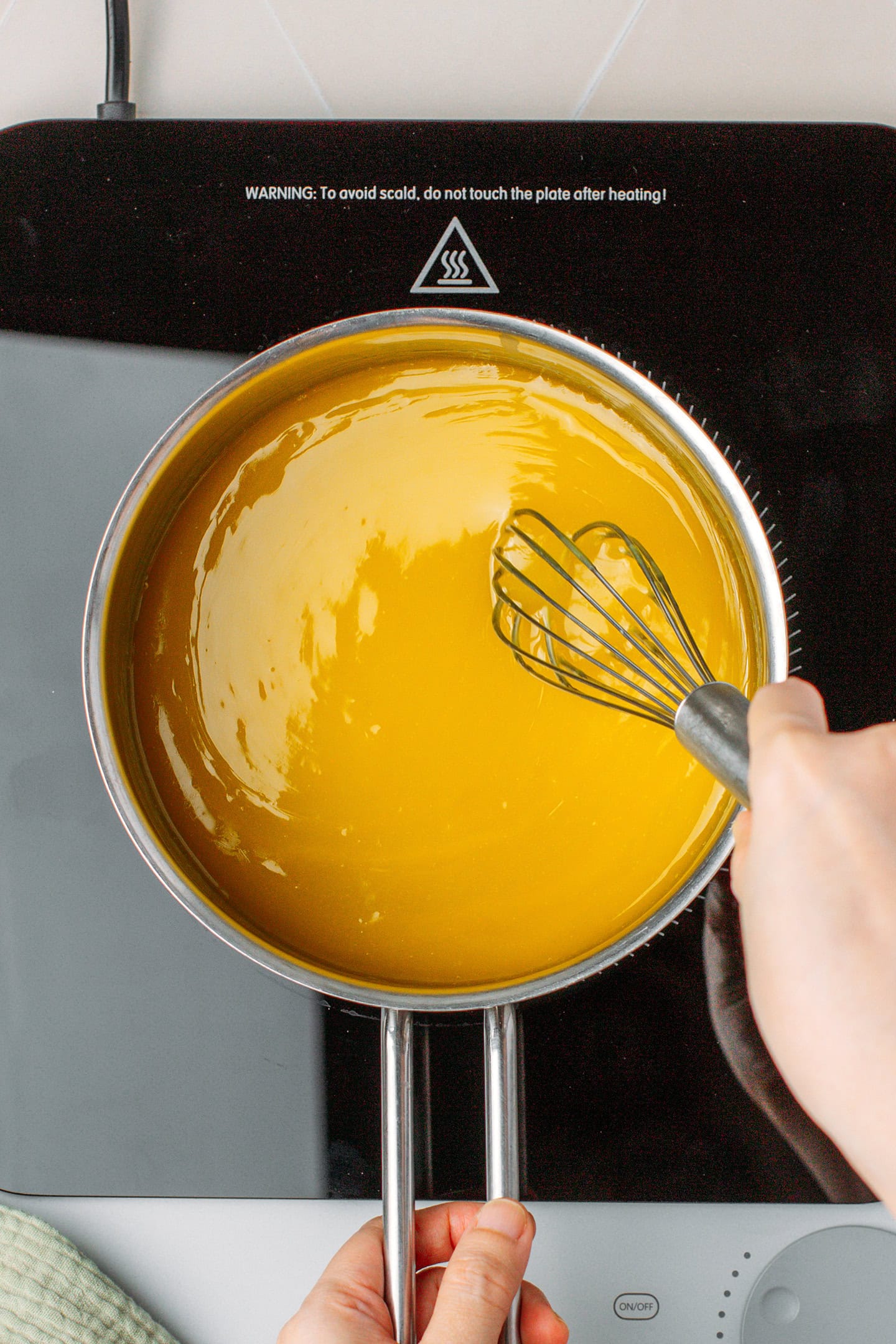
- Stir until the butter is melted and fully combined.
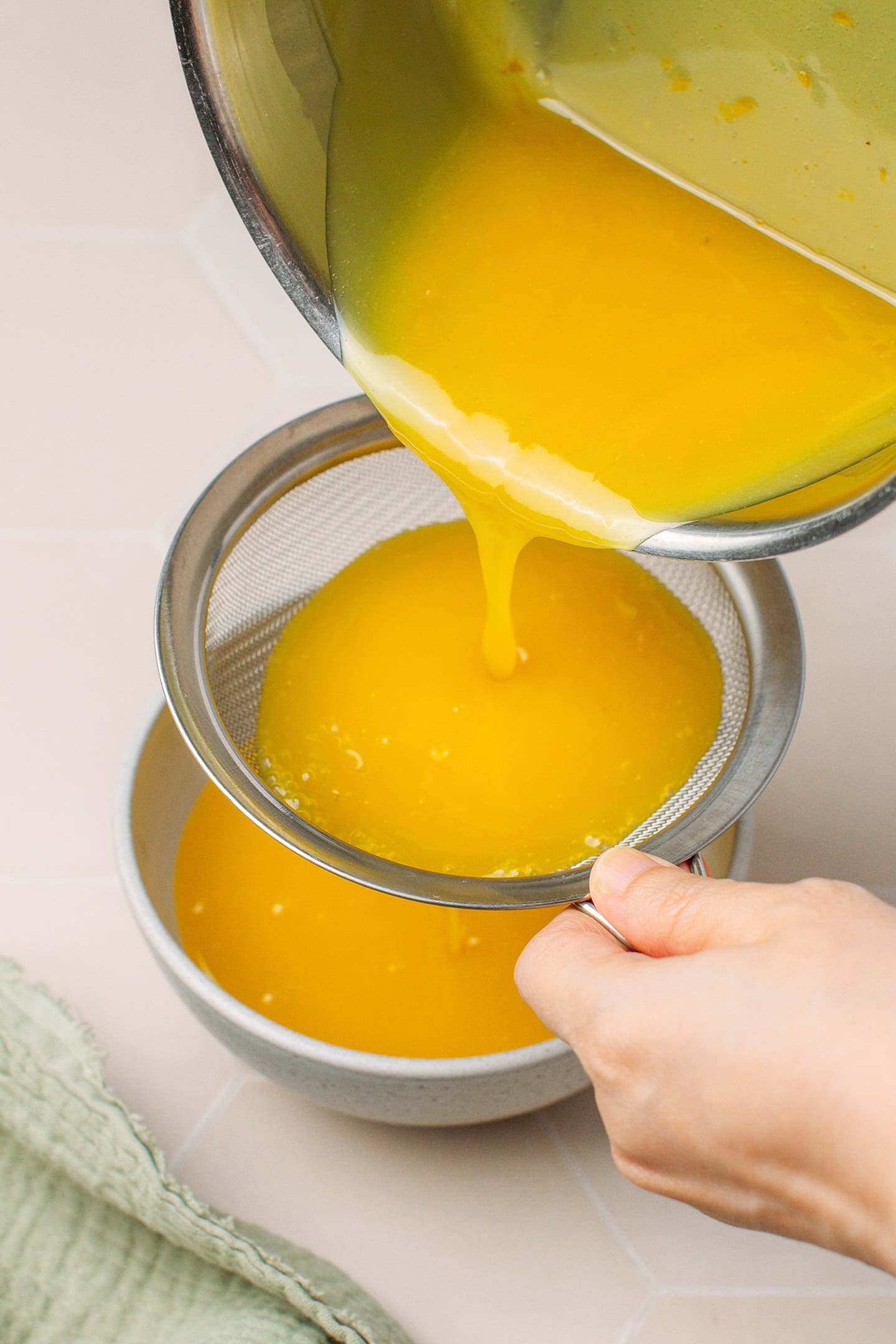
- Strain it. For a super smooth consistency, strain the lemon curd through a fine-mesh sieve.
📔 Tips
- Use fresh lemons. This is key! Your lemons should be as fresh as possible with firm skin and a bright yellow color. Bottled lemon juice won’t cut it here!
- Dissolve the cornstarch. Whisk the cream and cornstarch well before heating to make sure the cornstarch is completely dissolved. This will give you a smooth, lump-free curd.
- Cover with plastic wrap. To prevent a skin from forming on top of your lemon curd as it cools, press a piece of plastic wrap directly onto the surface of the curd.
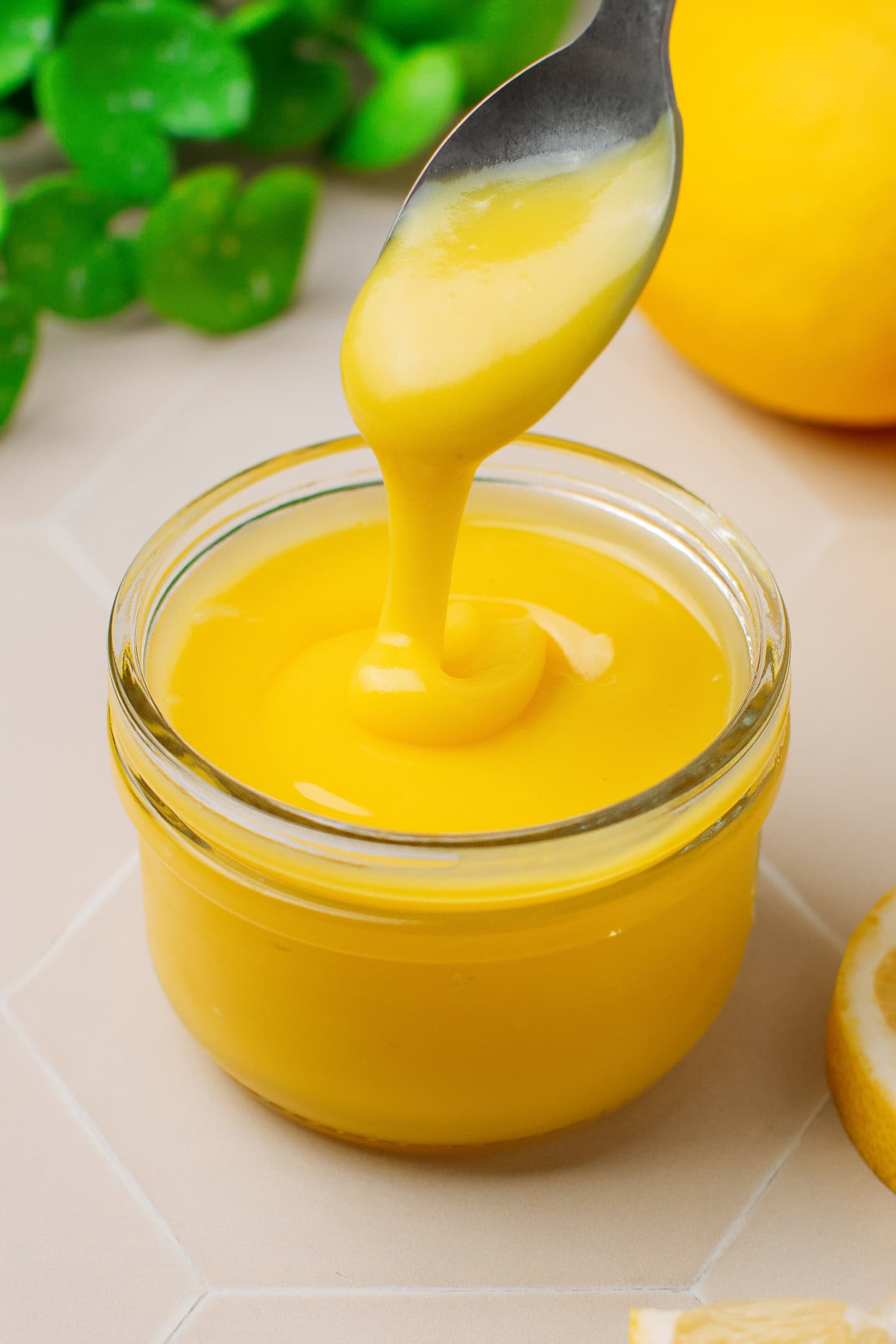
- Let it cool completely. Don’t judge the consistency of your lemon curd when it’s still warm. It will thicken significantly as it cools and chills.
🥞 Where to Use It
You can use this lemon curd in pretty much any way you’d use jam or maple syrup. Here are a few ideas:
- Vegan pancakes and waffles – Replace your traditional syrup with a spoonful of lemon curd for a bright, tangy finish.
- French toast – Spread it over warm toast or French toast.
- Oatmeal – Drizzle it over warm oatmeal or overnight oats. It would pair perfectly with blueberry overnight oats!
- Scones – Skip the jam and serve scones with a dollop of lemon curd.
- Crêpes – Spread it inside warm crêpes and garnish with fresh blueberries or blackberries.
❄️ Storage
- To store: You can store this lemon curd for up to 10 days in the refrigerator.
- Freezing: Since it contains cornstarch, this lemon curd does not freeze well.
💬 FAQs
Yes! You can easily replace the lemons with limes or oranges. Just follow the recipe and use the juice and zest from the citrus fruits of your choice.
Once chilled, it has a custard-like texture. It’s very thick and almost spreadable, although it will get thinner if you let it sit for a few minutes at room temperature.

⭐️ Did you like this recipe? Let us know in the comments below, and tag us on Facebook, Instagram, or Pinterest!

Save this recipe!
Enter your email below and I’ll send it to your inbox!
Plus, you will receive new recipes every week!
Vegan Lemon Curd
Ingredients
- 1/2 cup (100 g) sugar
- 1 tbsp finely chopped lemon zest (from 2 lemons)
- 3 tbsp (45 ml) fresh lemon juice
- 2 tbsp (16 g) cornstarch
- 1/8 tsp ground turmeric
- 1/16 tsp kala namak salt (Optional)
- 1/2 cup (120 ml) plant-based cream (I used 31% fat cream)
- 1/4 cup (56 g) vegan butter (diced into 1-inch/2.5cm cubes)
Instructions
- Combine the sugar and lemon zest. Add the sugar and finely chopped lemon zest to a bowl. Using your hands, rub the lemon zest with the sugar. This step releases the essential oils from the zest, resulting in a more intense lemon flavor.
- Mix the other ingredients. Transfer the sugar, lemon zest, lemon juice, cornstarch, turmeric, kala namak, and plant-based cream to a saucepan. Whisk until the cornstarch is dissolved.
- Heat until thickened. Heat the mixture over medium heat, whisking constantly. Once it reaches a boil, the lemon curd will slightly thicken.
- Stir in the butter. Remove from the heat and add the vegan butter. Whisk until the butter has melted and the mixture looks glossy.
- Strain it. Finally, strain the lemon curd through a fine-mesh sieve to remove the lemon zest and get a very smooth consistency.
- Chill in the fridge. Transfer the lemon curd to a glass jar and cover it with plastic wrap touching the surface (this helps prevent a skin from forming on top). Let the lemon curd cool for 30-45 minutes before transferring to the fridge. Chill for at least 6 hours or overnight before using.
- You can store this lemon curd for up to 10 days in the refrigerator.
Notes
Nutrition

About the Author
Thomas Pagot is the founder, photographer, and recipe developer behind Full of Plants. He created the blog in 2016 as a personal cookbook for vegan recipes. Through years of recipe development, Thomas has successfully grown Full of Plants into a trusted resource for plant-based recipes.
Leave a Comment